Matt Pearl

I am a ten-time Emmy and four-time Murrow award-winning reporter for WXIA-TV, the NBC affiliate in Atlanta, Ga. In my career, I have served as a correspondent for the 2008 Democratic National Convention, the 2010 and 2014 Winter Olympics, and the BP oil spill. I was recently named the NPPA's national Solo Video Journalist of the Year. I started the "Telling the Story" blog in February 2013.

5 lessons from the NPPA’s Best of Photojournalism 2017 winners

In the five years that I have captained this blog, I have written this post four times. It remains one of my favorite annual pieces to pen, because it involves one of my favorite annual traditions: watching the winners of the NPPA’s Best of Photojournalism video awards.

Every year I sit down, click on links, and marvel at the winners. And every year I take away new lessons that, I hope, will boost my own work. This year I was named a NPPA finalist for three of my stories, and I won the association’s prize for Solo Video Journalist of the Year. But I found, in the Best of Photojournalism winners, work that inspires me to improve and compels me to keep crafting.

Here are five lessons that will stay with me – and perhaps you too:

THE STORYLight Will Prevail, by Ryan Oliveira (KXAS-TV, Dallas)
THE LESSON: Sometimes the best treatment for raw emotion is restraint behind the camera.

A mass shooting last fall at a baptist church caused a crush of media to descend on the tiny town of Sutherland Springs, Tex. Residents struggled to grasp with the horror and loss, and they didn’t hide their emotions.

In this story, which took first place in the category of General Hard News Photography, Ryan Oliveira of NBC5 in Dallas met the rawness with distance and technique. He largely kept his camera back, focusing instead on framing and lighting exquisite shots to capture the intensity. I cannot say enough about his sensitivity here, and the same goes for his teammate on this story, reporter Noelle Walker. I have no doubt they were moved by what they saw in Sutherland Springs. It showed in pieces like this, that eschew boldness and instead show tenderness and sympathy during a tragic time.

(more…)

Five years. 400 posts. 100,000+ views. Thank you.

This will be a short post.

Maybe my journey into parenthood has caused me to appreciate brevity and efficiency. Maybe I don’t need much space to say what I need to say. But I am excited to publish this blog entry with celebration on my mind.

This is my 400th post for Telling the Story. It also marks more than five years since I launched the site.

I started the blog with two goals. For my own ambitions, I wanted to write more, challenging myself to produce two posts a week of narrative strength and thematic clarity. More importantly, I wanted to develop and contribute to a climate of inspiration and collaboration among my fellow journalists. I aimed – and still aim – to encourage us to think big about this profession. In my introductory post, the Storyteller’s Manifesto, I wrote, “I am excited to tackle the concept of storytelling. It is the one part of journalism that is not going anywhere.”

That hasn’t changed five years later, even as so much has.

(more…)

I’m a new father. And I’m aching to control time.

Last month I became a dad. I wrote this journal entry seven days later and felt it encapsulated my feelings a week into fatherhood.

***

Time moves too slow. A new father sits in the dark, his three-day old daughter in his lap. It’s 2 AM. His daughter cries in minute-long spurts and tries to worm her arms out of her swaddle blanket. Dad counters each move while trying to keep his daughter calm and, more importantly, quiet.

Time moves too fast. Yes, I wanted Olivia to stop crying and start sleeping. But even in a half-open-eyed slumber, I wanted to savor the moment.

Mom is sleeping in their bedroom, he hopes. They spent the previous hour pacing around the apartment, cycling through potential causes of the high-pitched pierce they’re sure has awakened their neighbors. But they don’t both need to stand guard. One can sleep while the other sits. Dad volunteered to sit. He wills his eyelids to stay up.

Everything about parenthood so far has been a fight for control. My wife and I have tried in vain to develop a routine. We have scraped together hours of sleep, first at the hospital and now at home. We have learned on the fly how to feed, clothe, change, and swaddle a tiny human who three days earlier existed only in the womb. We should want to fast-forward through this time and get to the good stuff: walking, talking, eating pizza, playing soccer, going to the prom. But then I look at Olivia, and I want time to freeze. Even when she cries, she seems perfect. She is untouched by the world and cocooned by her parents. At least that’s how it feels.

(more…)

3 GREAT STORIES: Starring life, death, and the DMZ

Every week, I shine the spotlight on some of the best storytelling in the business and offer my comments. “3 Great Stories of the Week” will post every Monday at 8 AM.

What does it mean to die? (2/5/18, New Yorker): I was sitting at a restaurant at the Mall of America, midway through covering the Super Bowl, when I spied this headline in my Twitter feed. I clicked, began reading, and sat for 20 minutes unable to focus anywhere else.

The case of Jahi McMath, declared brain-dead by a hospital in California, has been covered before. Rachel Aviv tackles it with tenderness, handling extremely weighty subjects with sensitivity and exploration. I had little interest in this story before reading it, but I couldn’t stop thinking about it afterwards.

(more…)

Equal representation in media isn’t just a task for the underrepresented

Representation is what counts. I hear this all the time from people whose communities lack it in politics, entertainment, and media. And in my field, I support that cause fully.

Newsrooms need voices that represent their communities. We must surround ourselves with people of different backgrounds and encourage those people to raise their voices about issues that affect them. This applies across the spectrum, from race and gender to political party, sexual orientation, and religion. I promote this in my work, from ensuring a diverse guest list on my podcast to encouraging younger journalists to understand their power. In the short and long term, representation matters.

But in preaching this message, I worry that we assign too much responsibility to the underrepresented. Yes, we should prioritize finding a diversity of voices, but we should not absolve journalists in the majority of understanding those voices.

The fact is, if you are a journalist, you will be required to cover people who are not like you. Maybe they don’t look like you. Maybe they don’t follow the same faith as you. Maybe they don’t share any number of beliefs and values that affect perspectives and perceptions. But stories will arise that will place you on unfamiliar ground. You must be willing to take the extra step. Beyond that, you should not only seek stories from those with common backgrounds. You should work to connect and build trust with other communities, especially if their stories too rarely get told.

Journalism is an imperfect science. We must turn unfamiliar assignments into accurate, compelling, relevant stories, often in a matter of hours. We won’t always get it right, and we should forgive ourselves for the occasional slip. But we cannot avoid the responsibility or expectations of our positions. One shoddy, superficial story can inflict massive damage to a reporter’s credibility. Each piece requires the same grind and outreach, no matter the barrier.

This brings me to my latest project, KOREATL.

A manager approached me with the idea in the fall: “There’s this huge Korean community in metro Atlanta that no one knows about, so let’s use the Olympics as a springboard to focus on it.”

It awoke my appetite. I had spent time in the community on an assignment over the summer, and I saw the potential for a powerful segment about identity and integration in immigrant communities.

I came back to my manager with a structure. I pitched a 20-minute mini-documentary that would explore those themes and could be broken down into two Olympic weeks of on-air segments. He loved it, and I got to work.

My first step was to seek out voices. My producer and I met at bakeries, made phone calls, and held a month’s worth of conversations before shooting a single frame. We digested what we heard and discussed how to present it. Then, during my various shoots, I kept my ears open and resisted to impulse to make judgments and blanket statements. I did not want to paint a community with one brush. I wanted the individuals to provide their own perspectives.

I also made an early decision that, in my mind, became crucial to the project: I kept my own voice silent.

For the first time in my career, I produced a long-form story that didn’t include my audio track as a reporter. This made my job much more challenging; in the end, I shot 15 hours of video for a 20-minute clip. But the work paid off in clarity and mission.

I take great pride in the work we produced, mainly because it has received unanimously positive reaction from both inside and outside the Korean community. The mini-doc went live Monday and became one of our most-watched YouTube videos of the week. I hope it will continue to inspire conversations and expand perspectives.

Representation matters most, but it should not simply be outsourced to the underrepresented. All of us in this field must prioritize it, with an empathetic ear, an open mind, and a willingness to not always seek the easiest path.
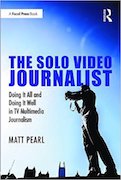
svj-cover-2

The Solo Video Journalist is available for purchase. You can find it on AmazonBarnes & Noble, and the publisher’s web site.

Matt Pearl is the author of the Telling the Story blog and podcast. Feel free to comment below or e-mail Matt at matt@tellingthestoryblog.com. You can also follow Matt on Facebook and Twitter.
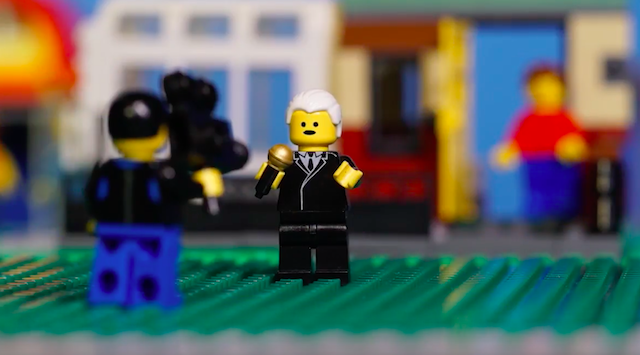
Covering the Super Bowl means staying focused amidst the circus

I landed last night from the Twin Cities wondering how I would answer a frequently asked question:

“What’s it like covering the Super Bowl?”

I never know how to answer, because a week at the Super Bowl brings experiences that seem so detached from each other.

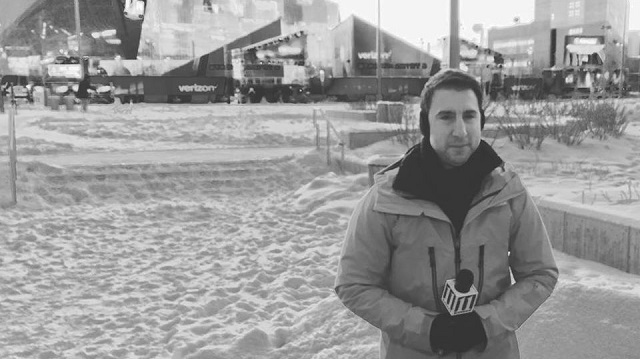
Covering the Super Bowl means arriving in Minneapolis, stopping at the hotel, and driving immediately to the Mall of America. As a tourist I had never felt compelled to visit this seven-stadium-sized monstrosity. On this trip it hosted the main media workspace, so it became a hub of press conferences, interviews, and live shots. I ate six meals there in eight days.

Covering the Super Bowl means developing on-the-fly routines to keep track of equipment. At home I lean on muscle memory; on the road I quickly formed mental checklists so I didn’t lose any of the cameras, microphones, and accessories that filled two checked bags and a carry-on. (I did lose a pair of a headphones, but I have made peace with that.)

Covering the Super Bowl means using public spaces for critical business. I sought shelter at a nearby Starbucks between sub-zero live shots outside US Bank Stadium. I interviewed a major Atlanta official in the lobby of a Doubletree in Minneapolis. Two days later I used the dining room of a Doubletree in St. Paul. And I wrote and edited several stories from the comfort of my hotel bed.

Covering the Super Bowl means having in-the-room access to company heads, billionaires, and even the NFL commissioner … and noticing the force field of PR reps and media relations workers surrounding each one.

Covering the Super Bowl means attending the press conference for Justin Timberlake’s halftime show and realizing the loose definition of “press”. One entertainment reporter led the room in singing “Happy Birthday”. An ensuing entertainment reporter regretted she couldn’t top such a performance. Timberlake took ten questions, none of which posed controversy and all of which seemed pre-screened to prevent it.

(more…)

3 GREAT STORIES: Starring #MeToo, mock trades, & Mars

Every week, I shine the spotlight on some of the best storytelling in the business and offer my comments. “3 Great Stories of the Week” will post every Monday at 8 AM.

#MeToo: Rape on the Night Shift (1/20/18, Reveal Podcast): With momentum for the #MeToo movement growing mainly in Washington and Hollywood, credit the producers and reporters at the Reveal podcast for investigating its impact in more hidden venues.

This episode repurposes a report from 2015 about an epidemic of rape and assault among female janitors. The report grips and devastates, and it leads into a follow-up and several strong discussions about the future of #MeToo. This is exactly what journalism should do: inform listeners about an issue, expose them to unheard stories in a compelling way, and expand their overall awareness and understanding moving forward.

(more…)

3 GREAT STORIES: Starring a pair from the Marshall Project

Every week, I shine the spotlight on some of the best storytelling in the business and offer my comments. “3 Great Stories of the Week” will post every Monday at 8 AM.

The volunteer (1/18/18, The Marshall Project): I have long admired the Marshall Project’s gripping coverage of the complexities around criminal justice. This piece, from staff writer Maurice Chammah, displays so much of what makes the site shine.

Chammah tells the story of Scott Dozier, a Nevada death row inmate who waived his legal appeals and, essentially, requested he be killed by the state. The problem? The state wasn’t prepared, and officials have spent the past year seesawing over Dozier’s case. Chammah finds a powerful subject and case study in Dozier, but mostly he exposes the chaos in the world around the inmate, particularly, in Chammah’s words, “states that want the harshness of death sentences without the messiness of carrying them out.”

(more…)

PODCAST EPISODE #59: Eric Mennel, senior producer, Gimlet Media

My first podcast of the year was inspired by a podcast I found late last year.

I have listened to Gimlet Media’s StartUp Podcast on and off since its inception. This past December I rediscovered it thanks to a five-part series called StartupBus. The premise? Per Gimlet’s web site: “This past summer, 20 strangers got on a charter bus headed from New York to New Orleans. For three days they had one goal: Build and launch companies from inside the bus. And then? Compete against each other.”

Sound like a reality show? It did to Eric Mennel. The Gimlet senior producer pitched StartupBus as an episode, got on the bus, and realized after two days he had struck audio gold. He turned it into a five-part series, with one episode for each day of the competition.

Think about the challenge. Mennel faced the curse of few limits; he had plenty of time and roughly two dozen people who could potentially become main characters in his story. He needed to find them, figure out the main stories, remain open to new events, record it all, and then – upon returning – winnow an absurd amount of audio into 150 minutes of content.

Mennel succeeded. He joins me on Episode #59 of the Telling the Story podcast.

(more…)

3 GREAT STORIES: Starring the value of photos in TV storytelling

Every week, I shine the spotlight on some of the best storytelling in the business and offer my comments. “3 Great Stories of the Week” will post every Monday at 8 AM.

Stains on the sidewalk: picturing Baltimore’s murders (1/9/18, WBFF-TV): Turns out a photo can make for some poignant video. Turns out a year’s investment in a project can pay off in six stellar minutes.

Reporter Paul Gessler and photographer Jed Gamber of WBFF-TV spent twelve months tracking the mission of Amy Herbert, a photographer with a school project. Her plan? Document each Baltimore homicide from the previous year, exactly one year later. Herbert graduated but continued the work. Gessler and Gamber continued to check in. They found moments and scenes that are displayed in their final product: a powerful piece to kick off 2018.

(more…)