Matt Pearl

I am a ten-time Emmy and four-time Murrow award-winning reporter for WXIA-TV, the NBC affiliate in Atlanta, Ga. In my career, I have served as a correspondent for the 2008 Democratic National Convention, the 2010 and 2014 Winter Olympics, and the BP oil spill. I was recently named the NPPA's national Solo Video Journalist of the Year. I started the "Telling the Story" blog in February 2013.

5 storytelling lessons from 2 Oscar-winning shorts, “Hair Love” & “The Neighbors’ Window”

I remember, a few winters back, driving by one of Atlanta’s few art house movie theaters and noticing a unique title on the board: “OSCAR NOMINATED SHORTS.”

Now THAT, I thought, is clever. Why not combine ten short films into one movie-going experience ?

Unfortunately I never followed through. These days, as a new parent, I see maybe one film a year in theaters and many more on my laptop in bed after my daughter falls asleep. But last week, when my sister in Manhattan called and raved about seeing this year’s crop of Oscar-nominated shorts, I was inspired.

At least, I was inspired to watch them on my laptop.

My wife and I rented the collection and were further delighted to find several shorts online for free – including the two that wound up winners. “The Neighbors’ Window” is a nimbly executed live-action film that fits extraordinary detail into a seemingly straightforward character piece. “Hair Love,” which won for animated short, left us in tears in less than seven minutes.

For those of us who work in journalism, there’s plenty to learn. Yes, we tell stories without staging, scripted lines from our subjects, and (typically) animation. But we still tell stories.

Here are five lessons from these two Academy Award winners as to how:

(SPOILER ALERT: I will be revealing key details about the plots of both films. My advice: watch each before you read further. They’re short, after all. And they’re worth the look.)

1. Embrace your limitations: “The Neighbors’ Window” is 20 minutes long, set and shot in two New York City apartments, and contains ten distinct scenes about a Brooklyn mother who realizes she can see into the apartment of the hard-partying twenty-somethings who move in across the street.

It was shot in four days. It cost less than $100,000.

Those numbers might seem astronomical for journalists, but they’re minimal for filmmakers. Yet Marshall Curry – who received honors as a documentarian before breaking into fiction – hustled hard and found ways to produce. He convinced the real-life apartment inhabitants to let him shoot for free; he convinced the actors of his vision; and he convinced himself he could cover everything he needed at a five-minute-per-day pace.

Every story in journalism comes with limits: the extra shot we can’t get, the drive we can’t make, the interview we can’t land. Don’t let those limits prevent you from persevering. Find creative – and compact – ways to get your viewers the information they need.

2. Don’t think you have your story figured out before you shoot it. Speaking of creative, Curry said his four-day schedule was almost derailed … by snow.

“On the second day of shooting, New York was hit by an unexpected blizzard,” Curry said on the podcast On the Mic with Tim Drake. They had planned to shoot half of a long scene on the day of the blizzard and half of it the next day. Since the main character’s apartment featured so many windows, Curry risked continuity issues where half the shots showed falling snow and half didn’t. “So that morning,” he said, “we decided to embrace the blizzard. We tweaked the script to include it. We shot all of the set-ups that faced a window the first day when the snow was coming down, and on the second day we shot all the reverse-angle shots where the window is behind the character.”

You’d never know from the final cut, which works seamlessly and sparkles because of the snow. The blizzard enhances the film, but only because Curry adjusted to incorporate it.

Too often we head out on an assignment with a preconceived notion of how it will unfold. That walls us off to the truth of a story – and the wrinkles that make it unique. In my experience, the most memorable moments are often the least expected, and a perceived snag in the shoot can become an essential component in a beautiful story.

3. Remember how good you’ve got it. This lesson comes from the film’s content, not its craft. In “The Neighbors’ Window,” the main character becomes jealous of and wistful for her neighbors’ seemingly carefree existence, but she ultimately learns it’s not so carefree – and that her neighbor similarly envies her through the window across the street.

It’s a great reminder for all of us in journalism, who cannot avoid social media and are continually bombarded with the highlights of our colleagues’ lives. We all possess unique skills and opportunities. Let’s celebrate our peers and appreciate our paths.

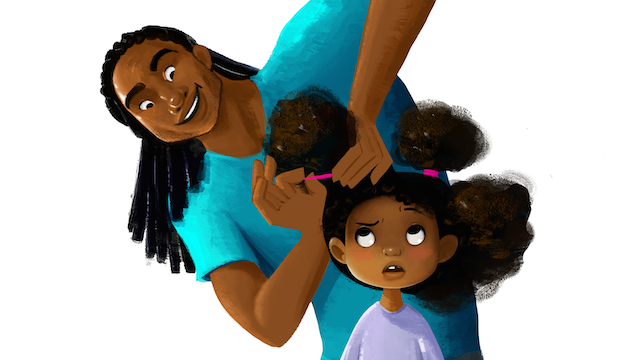
4. Set up your moments. “Hair Love” is a sweet, sweet six minutes. And in those six minutes, it delivers a multitude of moments. Some play for laughs, while some elicit tears and “Awwws.” All are richer because of how the filmmaker cultivates them.

Matthew E. Cherry crams so much life into the story of a father learning to do his daughter’s hair. But pay attention to how he does it. Here’s an early example: the film begins as the daughter awakens and jumps out of bed, beaming for the chance to style her hair. She throws on an outfit, pulls out her tablet, and scans an instruction-providing YouTube page until she arrives at the perfect look. When she finally finds it, the moment comes with a symphonic backing track, visions of the girl’s mother styling her hair, and dialogue spoken by Issa Rae. It’s glorious.

But it doesn’t happen without setup.

Beyond the daughter’s excitement, Cherry also builds up the payoff by showing her scan various hair options with her cartoon cat, who comically nixes each idea. You could point to dozens of directorial choices in the first 1:15 of the film that infuse the viewer with anticipation.

Journalists often forget this when producing stories for air. We scream our reveals at the top instead of laying the groundwork for them – or providing necessary context for them. “Hair Love” shows why setup needn’t be a sacrifice.

5. Represent your community. “Hair Love” also demonstrates an overdue lesson for storytellers of all stripes – and the gatekeepers in both Hollywood and newsrooms who decide which stories should be told. “We wanted to see more representation in animation,” Cherry said in his Oscar acceptance speech. “We wanted to normalize black hair.” He even brought to the ceremony DeAndre Arnold, a Texas teenager who became a news story when he was told his dreadlocks violated his high school’s dress code.

Arnold’s story grew because of journalists and news managers who decided it should be amplified. We make choices in every editorial meeting about what to cover – and what not to cover. It is our responsibility to fill our newsrooms with diverse voices, no matter our backgrounds, and then listen to those voices. The vast majority of us don’t make hiring decisions, but we can make conscious efforts to increase our exposure to media, communities, and individuals who bring different experiences and perspectives into our worlds.
svj-cover-2

The Solo Video Journalist is available for purchase. You can find it on AmazonBarnes & Noble, and the publisher’s web site.

Matt Pearl is the author of the Telling the Story blog and podcast. Feel free to comment below or e-mail Matt at matt@tellingthestoryblog.com. You can also follow Matt on Facebook and Twitter.
PODCAST EPISODE #74: John Sharify & Joseph Huerta, “Bob’s Choice”

The most powerful 60 minutes I watched last year came from two storytellers at their best.

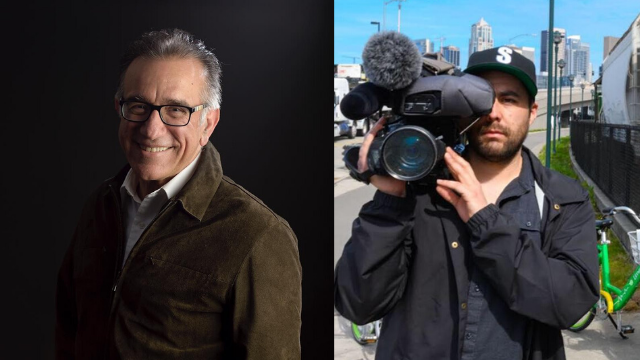
John Sharify has won umpteen awards through a reporting career that has spanned decades. Joseph Huerta is assembling an equally impressive resume as a photojournalist, now at WFAA-TV in Dallas. Last year, for their final story together at KING-TV in Seattle, Sharify and Huerta produced an hour-long documentary about a man named Bob.

That man, 75 years old and diagnosed with terminal cancer, had chosen to end his life.

Bob Fuller planned to utilize Washington’s Death with Dignity Act to request a lethal dose of medication on a date of his choosing. Several months before that date, Fuller reached out to Sharify to see if his story was worthy of being told.

Sharify knew he wanted to tell it.

He teamed with Huerta to produce “Bob’s Choice,” which is embedded below and available anytime on YouTube. It is stirring, touching, moving, and just about every other emotional adjective you can name. It is also musical, downright funny at times, and a thorough look at a difficult subject.

Sharify and Huerta are my guests on Episode #74 of the Telling the Story podcast.

This is among the longest episodes I’ve done. That’s partly because of having multiple guests, but it’s mainly because this subject cannot be rushed. Sharify and Huerta discuss their many storytelling decisions on “Bob’s Choice,” but they also open up about their own emotional journeys and the experience of watching someone voluntarily – but peacefully among family and friends – take his own life.

The discussion is heavy, but it’s worth it.

(more…)

The subject of solo video journalist safety begs examination – by every journalist

Before November 8th, 2019, Paige Pauroso had begun to carve a modest reputation as a solo video journalist with little concern for limits.

At her first job in Lubbock she drove eight hours solo to cover an execution. Three months into her second job, at WBTV in Charlotte, she stood among 70-mile-per-hour winds on Myrtle Beach during Hurricane Dorian. Weeks before the November book, when a post in the Storytellers Facebook group asked for suggestions on strong hard news reporters, one commenter replied, “Paige at WBTV is amazing!”

“I used to joke at my old station that I didn’t sense fear,” Pauroso told me. “It didn’t cross my mind easily.”

Since November 8th?

“I think every local journalist in the country now knows me as the journalist who got whacked in the head.”

(more…)

A brief (but necessary) ode to NBC Left Field, a storytelling unit no more

On January 10, a Tweet came across my feed that saddened my heart:

“Today is Left Field’s last day,” it said. “Thank you for watching our videos over the past few years. It’s been a thrilling ride and we’ve loved every minute of it. Our stories will live on.”

The Tweet came from NBC Left Field, a video storytelling unit launched in June 2017 with the self-described goal of “understanding human beings through film, technology and heaps of creativity.”

For 31 months, they delivered. I discovered Left Field when one of its early videos, a piece called “Hunting for Addicts” produced by Emily Kassie, won an NPPA Best of Photojournalism Award for solo in-depth storytelling. I clicked on Kassie’s clip, was enthralled by its craft and content, and immediately slid to YouTube to learn more about the unit that green-lit her story.

I was extremely impressed.

Every video brought immaculate photography, creative storytelling, and some innovative move that I’d inevitably file away with the intent of one day incorporating in my own work. In 2018 I received the chance to speak on a panel with Kassie and managing editor Bob Bikel, and my admiration grew greater.

I don’t know why Left Field shuttered, but I want to use this platform to briefly acknowledge the diverse, clever, passionate storytellers whose work brought such inspiration. I invite you to check out their YouTube page, where their stories remain.

In the meantime, here are a few pieces I’d recommend:

(more…)

It’s time for a break … but only for a while

This isn’t an entry I prefer to write, but the fact that I’m writing it means good things are coming.

For the rest of 2019, I will largely take a hiatus from the Telling the Story blog and podcast. I might post the occasional entry, but mostly I need to focus my nights and weekends elsewhere.

“Elsewhere” is a project I can’t wait to unveil.

I cannot say much now, but I look forward to revealing all soon … and returning with new blog entries and podcast episodes in 2020. Till then, here’s to powerful journalism and meaningful storytelling!

svj-cover-2

The Solo Video Journalist is available for purchase. You can find it on AmazonBarnes & Noble, and the publisher’s web site.

Matt Pearl is the author of the Telling the Story blog and podcast. Feel free to comment below or e-mail Matt at matt@tellingthestoryblog.com. You can also follow Matt on Facebook and Twitter.
REPOST: What it’s like when your story goes viral

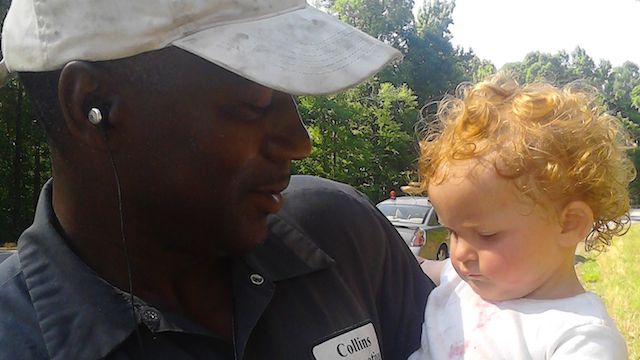
This post originally ran in 2014, when I told Bryant Collins’ story for the first time. Earlier this week, my WXIA-TV colleague Nick Sturdivant caught up with Bryant and found the same humble, giving individual whose story went viral five years earlier.

On Friday, a man named Bryant Collins saved the life of a 15-month-old baby girl, whom he spotted on the side of a highway.

On Monday, I interviewed Collins about his unexpected opportunity to become a hero.

Neither of us expected what happened next.

In a span of 25 hours, the story of Bryant Collins — and the baby he rescued — grew from my NBC affiliate in Atlanta to NBC Nightly News, going extraordinarily viral along the way. I have never seen anything like it, at least with one of my own stories.

And if I had to pick a story of mine to go viral, I might just choose this one.

(more…)

You don’t need grad school to succeed as a journalist. Here’s why I went anyway.

Six minutes from the front of the line, six days until graduation, my classmates and I wait at the University of Georgia student bookstore to buy our caps and gowns. We don’t need to do this. Our grad school doesn’t require it. But we have decided to splurge, to indulge in a dash of pomp and a sprinkle of circumstance in this rare setting that encourages it.

The jokes begin. I turn to a classmate, an award-winning reporter at the Atlanta Journal-Constitution, and wonder aloud how to most pretentiously celebrate our pending degrees.

“What if we change our e-mail signatures to include our degree? What if I signed every message with ‘Matthew Pearl, MFA?’”

“Yes,” he responds, “and you should add a photo in your cap and gown with a serious, academic expression. And you should list your published works underneath.”

We envision this. Then we envision how quickly our coworkers would chuck us out of our respective newsrooms.

In the world of daily journalism, an MFA in Narrative Nonfiction may not seem like much. It won’t add extra digits on my paycheck. It won’t increase access on my stories. It won’t bring a new wave of followers to my Facebook page. I work in TV news, where the average script runs maybe a page. One might question the wisdom of honing the skills to write book-length projects.

But this isn’t about wisdom – at least, of the conventional type. It’s about growth, craft and passion.

(more…)

Local news rarely covers climate change. Here’s why we did.

Late last month, after the first round of Democratic debates devoted just ten minutes to climate change, former NBC & PBS reporter John Larson posted the following in a Facebook group of his peers:

“Is there a Climate discussion in your newsroom? In Broadcast we excel at Breaking News. We’re poor with huge stories that evolve… slowly. … Will anyone bring it up in your next morning meeting? Or better, explore ways to tell the stories? If not, how about you?”

From my desk, I nodded hard. And I couldn’t wait to share what I had brewing.

A few months earlier, I had shared similar frustrations with my news director. “I want to do a special on climate change,” I told her, but I wanted to maneuver around all the pitfalls that keep us in local news from tackling the topic.

It’s too toxic.

It’s too political.

It’s too daunting.

It’s too depressing.

The challenge was laid: how do we cover this subject – among the most important facing our planet – in a way that breaks through the noise and informs our audience?

Here’s what we came up with:

This past Monday, we launched PLAN G, a 20-minute documentary that will run as a half-hour special in our Friday and evening newscasts. Each night in our newscasts, we tell the story of a different Georgian uniquely affecting – or affected by – the changes to our climate. I shot and edited the entire special myself – with the exception of my opening standup – and worked with a graphic artist and digital specialist to handle the overall look and online rollout, respectively.

Mostly, I spoke often with producers and managers about how to attack this subject. We came up with a few foundations:

Dig deep for background. Before I shot a frame of video, I logged at least a dozen conversations with leaders and experts in our state. I learned of tremendous resources that approached the subject in an objective way. I built a compendium of potential storylines before deciding which to make my focus.

Let people tell their stories. Except for my opening standup – and the occasional questions to my interview subjects – I kept my voice out of it. I spoke with people of different backgrounds, life experiences, and even different views about climate change. I spent days with each. I wanted to allow them to speak for themselves – at least, as much within reason, since I still edited hours of footage per person into roughly 4-5 minutes each.

Don’t try to cover every inch. There are so many fascinating stories about Georgians in the center of the climate conversation. Even with 20 minutes of real estate, I knew I couldn’t possibly cover them all. I focused on four and tried to select people who could provide a wide array of perspectives.

Swing for the fences, but don’t be afraid to fail. In some ways, I’m a glutton for punishment. I find subjects that are taboo, that don’t have the sexiest headlines, that don’t get automatic clicks. I feel a journalistic responsibility to cover stories that matter, and I take on the uphill climb of presenting them in a way that will resonate.

In this case, I’m still not totally sure if it worked.

The night the special launched, it received tepid response. Our rollout began slowly, and we waited to reach out to the communities and groups we thought would gravitate to it. But even as we struggle to amplify its reach, I’m glad we took on the task.

As John Larson said, “We’re poor with huge stories that evolve … slowly.” But we can’t abstain from the responsibility.

We must continue to embrace it.

svj-cover-2

The Solo Video Journalist is available for purchase. You can find it on AmazonBarnes & Noble, and the publisher’s web site.

Matt Pearl is the author of the Telling the Story blog and podcast. Feel free to comment below or e-mail Matt at matt@tellingthestoryblog.com. You can also follow Matt on Facebook and Twitter.

PODCAST EPISODE #73: Solana Pyne, executive producer, Quartz

Most of my guests on this podcast are in local news, because most of my audience are reporters, photojournalists, and solo video journalists in local news.

But I was reminded again watching the winners of this year’s National Edward R. Murrow awards about the fascinating, compelling work on the digital front.

How does that work come about? Perhaps it comes from a side of the industry that had to re-examine its definitions of storytelling. It’s so important to see how the standards have evolved for audiences who don’t distinguish between the types of content they receive.

Solana Pyne is setting those standards. Her work with the Quartz video team employs many of the tactics that traditional storytellers embrace, but she doesn’t stop there. Her team produces work that bends boundaries but brings journalistic chops. Last month, their joint production with Retro Report about the future of gaming – received a National Murrow award.

Pyne is my guest on Episode #73 of the Telling the Story podcast.

“It’s easy to presume your audience will be with you,” said Pyne, among other great words of advice, “so being forced to figure out how to capture people’s attentions really quickly is a good thing.”

(more…)

5 lessons from the 2019 National Edward R. Murrow Award winners

A few years ago, the RTDNA added a new category for its esteemed Edward R. Murrow awards in journalism: Excellence in Innovation.

But this year, as I survey the national winners that were announced last week, I see innovation everywhere.

It shows on the local level, thanks to ambitious companies including the one (TEGNA) for which I feel proud to work. It thrives on the national level, where everyone from ESPN to Univision is flexing its storytelling muscles. And it particularly shines in the digital realm, where news organizations need not worry about breaking the rules because they’re creating them.

Over the past few days, I carved out hours to watch this year’s winners. Here are five lessons that have already embedded themselves in my own journalistic mindset:

THE STORY: The legacy of the zero tolerance policy (Univision Noticias Digital)
THE LESSON: If you’re focusing on one person’s story, immerse yourself in it.

Per Univision’s research, more than 2,500 children were separated from their families at the US-Mexico border by American officials. This is part of the US government’s “zero tolerance policy.”

This story stood out because the journalists involved focused on one child and dove deep.

The Univision crew follows a six-year-old Guatemalan girl named Adayanci Pérez as she returns home after three-and-a-half months. The details are harrowing. Pérez returns to school and barely smiles, looking shook around her teachers and classmates. Her family can’t read the PTSD diagnosis she received before her return because it’s in English. Revelations like these fill the nine-minute mini-doc, and they unleash so many questions. They were only uncovered because of the commitment and time investment of all involved.

(more…)